Quiz Entry - updated: 2026.07.30
What are the three PAgP modes, and which combinations form an EtherChannel?
On (forced, no negotiation), Desirable (actively initiates), and Auto (passively waits). At least one side must be Desirable for PAgP (Port Aggregation Protocol) negotiation to work.
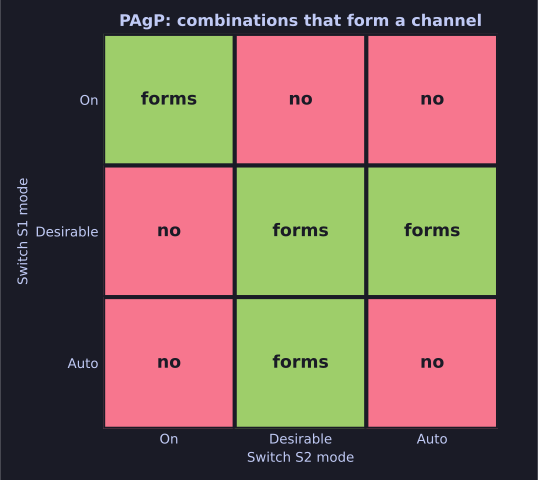
* PAgP mode combinations. *
PAgP modes:
- On — forces the channel without PAgP negotiation. No PAgP packets exchanged.
- Desirable — actively sends PAgP packets to initiate negotiation
- Auto — passively waits; responds to PAgP packets but never initiates
Mode combinations:
| S1 | S2 | Channel Forms? |
|---|---|---|
| On | On | Yes (no negotiation) |
| On | Desirable/Auto | No (on doesn't negotiate) |
| Desirable | Desirable | Yes |
| Desirable | Auto | Yes |
| Auto | Auto | No (neither initiates) |
Key rules to remember:
- On + On works, but
Onwith anything else fails (on mode doesn't send PAgP packets) - Auto + Auto fails — both are passive, so nobody starts the conversation
- At least one side must be Desirable for PAgP negotiation
Tip: "Desirable" is like raising your hand to form a team. "Auto" waits for someone else to raise theirs. Two people waiting = nothing happens.
Go deeper:
 EtherChannel Tutorial (9tut) — PAgP auto/desirable/on combos (auto+auto fails), with the PAgP↔LACP equivalence table.
 EtherChannels with LACP (Network Direction) — why open LACP is preferred over proprietary PAgP.