Quiz Entry - updated: 2026.07.30
What is cell breathing, and how does active cell breathing (offloading) work?
Cell breathing is the phenomenon where a cell's effective coverage area shrinks as it gets more users — active cell breathing deliberately shrinks overloaded cells and expands neighboring ones to balance load.
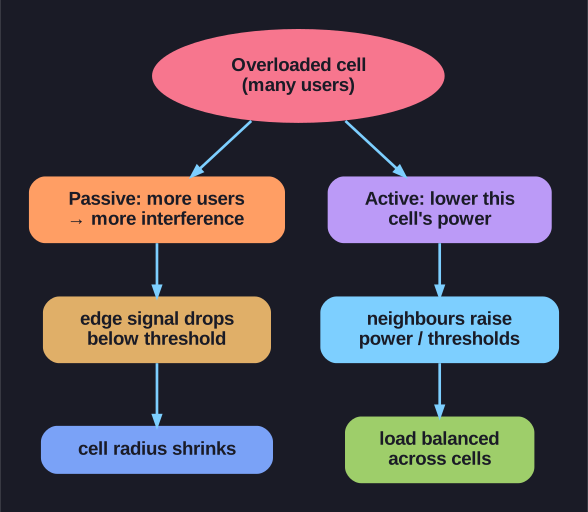
* Passive cell breathing vs active offload to neighbours. *
Passive cell breathing (the natural effect):
- More users in a cell → more interference → signals at the cell edge fall below the decodable threshold
- The effective cell radius shrinks even though the base station hasn't changed its power
- Users at the cell edge get pushed to neighboring cells
- Particularly prominent in CDMA/UMTS (3G) because all users share the same frequency
Active cell breathing (offloading):
- The network deliberately reduces the cell size of overloaded cells
- Neighboring, less loaded cells expand their coverage to absorb the displaced users
- This balances the load across cells — no single cell is overwhelmed
How it works technically:
- Reduce the overloaded cell's transmit power → coverage shrinks
- Increase neighboring cells' power or adjust handover thresholds → they pick up the edge users
- The network controller orchestrates this automatically
Tip: Think of it like inflatable balloons packed together — when one inflates too much (too many users), you deflate it slightly and the surrounding balloons expand to fill the gap. The total coverage stays the same, but the load is distributed more evenly.
Go deeper:
 Cell breathing (telephony) (Wikipedia) — defines cell breathing as overloaded CDMA cells offloading to neighbours by shrinking their service area.