What is microarchitecture and how does it differ from ISA?
The microarchitecture is the concrete hardware implementation of an ISA — the actual circuit design and "tricks" used to run instructions fast.
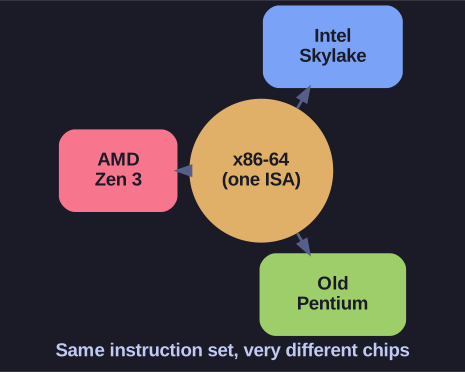
* One instruction set like x86-64 is realised by many different microarchitectures across vendors and generations. *
If the ISA is the contract, the microarchitecture is how a particular chip fulfils it. The crucial idea is that one ISA can have many microarchitectures: Intel Skylake, AMD Zen 3, and an old Pentium all implement x86-64, yet internally they look nothing alike — different pipeline depths, cache sizes, branch predictors, and out-of-order machinery.
| Aspect | ISA | Microarchitecture |
|---|---|---|
| What | Interface / specification | Implementation |
| Visible to | Programmers, compilers, OS | Hardware designers |
| Changes | Rarely (backwards compat) | Every chip generation |
| Example | x86-64 | Skylake, Zen 3 |
This separation is what makes the whole ecosystem work: software keeps running while hardware quietly gets faster underneath, and vendors compete by building better microarchitectures for the same instruction set.
Go deeper:
 Microarchitecture (Wikipedia) — how one ISA is turned into a concrete processor implementation.