What is "Speak-up", and why is it a deliberate counterweight to strict hierarchy?
Speak-up is the explicit licence — and duty — for a junior or less powerful team member to voice a safety concern despite the hierarchy, so that rank never silences a life-saving observation.
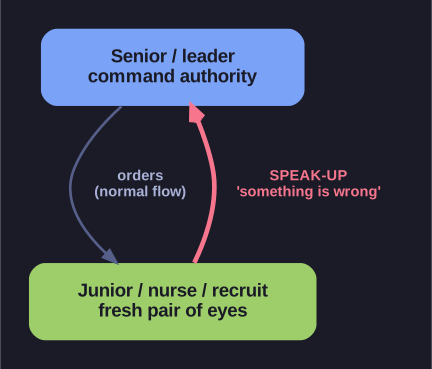
* Orders flow down the hierarchy; Speak-up is a protected channel up it, so a junior's safety concern can reach the leader instead of being buried by rank. *
Steep hierarchy is necessary in a crisis, but it has a dangerous side effect: the person who notices the problem may be too junior to feel they can interrupt the person in charge. Speak-up is the designed remedy:
- It legitimises a subordinate raising "I think something is wrong here" even to a senior.
- It exists precisely because information asymmetry runs both ways — sometimes the junior or the nurse sees the thing the leader has missed.
- In settings like weapons handling it is survival-critical, backed by strict rules, safety regulations, unloading checks and sanctions, because suppressing a safety call can kill.
Speak-up doesn't dissolve the hierarchy — it carves out a protected exception for safety so that authority and a fresh pair of eyes can coexist.
Tip: Without an explicit Speak-up norm, hierarchy quietly converts "I noticed a problem" into "I didn't dare say anything" — one of the classic roots of preventable disasters.
Go deeper:
 Wikipedia — Just culture — the blame-aware environment that makes people feel free to report and speak up.
- Wikipedia — Safety culture — the shared norms that let authority and a fresh pair of eyes coexist.